Why Spring Rainstorms Mean It’s Time for a Gutter Check in Rochester Hills
Spring in Oakland County brings heavy rains that test your home’s drainage like nothing else. If your gutters aren’t clear and functioning, that water goes straight to your roof, siding, or foundation. We see the aftermath every season—preventable damage that starts with a simple clog.
How Spring Storms Overwhelm Gutters in Our Climate
Rochester Hills’ spring storms dump inches of rain in short bursts, often with wind that carries debris. Leaves from last fall, seed pods, and shingle grit collect fast, creating blockages that back up water under the roof line.
Frozen ground in early spring can’t absorb overflow, so water pools at the foundation. This is when we see the most calls for basement flooding and cracked driveways—all traced back to neglected gutters.
Signs Your Gutters Need Attention After a Storm
Water spilling over the sides during rain is the most obvious red flag. But also watch for sagging sections, which mean standing water has weighed them down.
Check the ground below downspouts for erosion or small trenches. If the splash block isn’t directing water at least 4–6 feet away, your foundation is at risk. We also look for rust streaks or peeling paint on fascia—early signs of trapped moisture.
Post-Storm Gutter Red Flags
- Overflowing water during rain
- Sagging or pulling away from fascia
- Erosion or trenches below downspouts
- Rust, peeling paint, or mildew on fascia/soffit
- Visible debris or plants growing in gutters
The Hidden Damage Clogged Gutters Cause
When gutters back up, water wicks under shingles and rots the decking. In Rochester and Auburn Hills, we’ve seen entire roof sections need replacement because a single clog went unnoticed for months.
Ice dams in late winter often start with fall debris left in gutters. Come spring, the same gutters can’t handle meltwater plus rain, leading to leaks inside walls. Foundation cracks and basement seepage follow close behind.
Gutter Systems We Service in the Area
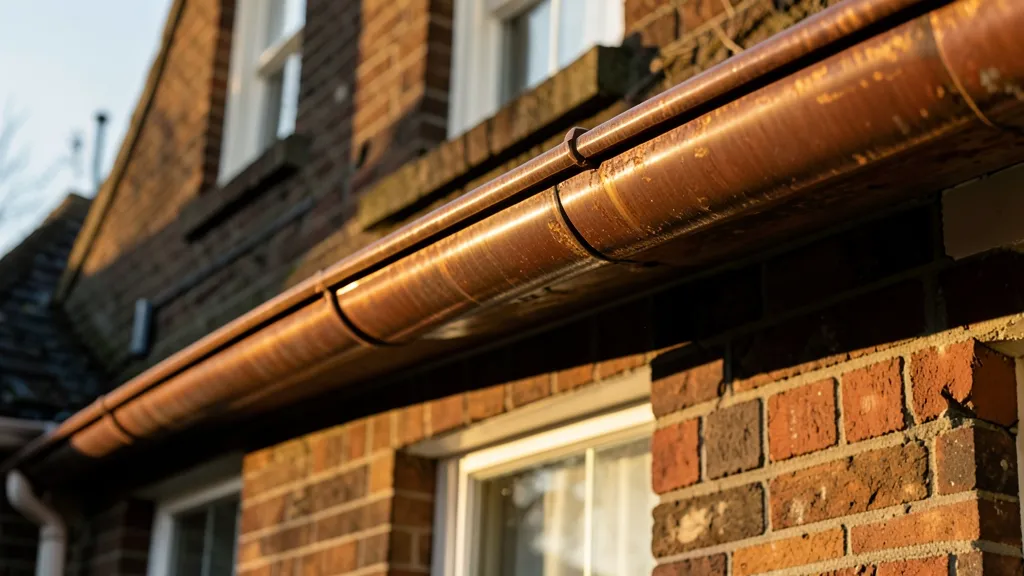
Most homes here have aluminum seamless gutters, but we also work with vinyl, copper, and galvanized steel. Each material has its quirks—vinyl can crack in freeze-thaw cycles, while steel rusts if not maintained.
Downspouts are just as critical. We often find them clogged at the elbow or crushed by ladder use. In commercial properties in Troy and Shelby Township, we service box gutters and larger-capacity systems designed for flat roofs.
| Material | Lifespan | Common Issues | Maintenance Tip |
|---|---|---|---|
| Aluminum Seamless | 20–30 years | Dents, loose hangers, corrosion at seams | Inspect seams annually; reseal as needed |
| Vinyl | 10–15 years | Cracking in cold, sagging, UV fading | Avoid pressure washing; replace damaged sections promptly |
| Copper | 50+ years | Patina buildup, theft risk | Clean gently to preserve finish; check for stolen sections |
| Galvanized Steel | 15–20 years | Rust, paint peeling | Repaint every 5–7 years; monitor for rust spots |
Why DIY Gutter Cleaning Falls Short
Ladder work is dangerous, especially on two-story homes in Oakland Township. But even if you reach the gutters, most homeowners miss the downspout clogs hidden inside the pipe.
We use high-pressure flushing and specialized tools to clear debris from the entire system, including underground drains. Plus, we spot early issues like loose hangers or failing seals that DIYers often overlook.
Never lean a ladder against gutters—they’re not designed to support weight. Use a sturdy, level surface and have a spotter. Even then, professionals have the right equipment and insurance.
When to Call in the Pros for More Than Cleaning
If your gutters are constantly clogging, gutter guard installation may be the solution. We install micro-mesh and reverse-curve systems that keep debris out while allowing water to flow freely.
Sagging gutters often need resealing or resloping to restore proper drainage. In storm damage cleanup, we also repair detached downspouts, reattach loose sections, and replace damaged fascia boards.
What a Professional Gutter Inspection Covers
We start at the roof line, checking for proper slope (1/4 inch per 10 feet is ideal). Then we inspect hangers, seals, and end caps for leaks or separation.
Downspouts are tested for flow and alignment. We also examine the splash blocks and drainage paths to ensure water is directed away from the home. In commercial gutter cleaning, we add roof membrane checks and large-debris removal.
How to Inspect Your Gutters After a Spring Storm
A quick visual check can reveal problems before they escalate.
- 1Safety Setup
Use a stable ladder on level ground, or inspect from the ground with binoculars. Never work in wet or windy conditions.
- 2Check for Overflow
Run a garden hose into the gutters. If water spills over the sides, there’s a clog or improper slope.
- 3Look for Sagging or Damage
Note any sections pulling away from the fascia, rust spots, or dents. These often indicate trapped water or impact damage.
- 4Test Downspouts
Ensure water exits the downspout and flows away from the foundation. If it backs up, the downspout is likely clogged.
- 5Inspect the Ground Below
Look for erosion, puddles, or trenches near the foundation. These signal poor drainage that needs addressing.
Frequently Asked Questions
How often should gutters be cleaned in Rochester Hills?
Twice a year is the minimum—once in late fall after leaves drop, and again in early spring before the heavy rains. Homes with many trees or steep roofs may need more frequent cleaning. Request a quote to assess your specific needs.
Can clogged gutters really cause foundation damage?
Absolutely. When gutters overflow, water pools around the foundation, leading to cracks, basement leaks, and even structural shifting over time. Properly functioning gutters and downspouts direct water safely away from your home.
What’s the difference between gutter cleaning and a roof inspection?
Gutter cleaning focuses on removing debris from gutters and downspouts to ensure proper drainage. A roof and gutter inspection goes further, checking for damage to shingles, flashing, fascia, and the gutter system itself. We often combine both for a full assessment.
Do gutter guards eliminate the need for cleaning?
Gutter guards reduce the frequency of cleaning by blocking most debris, but they’re not maintenance-free. Small particles can still accumulate, and guards themselves need occasional cleaning. They’re a great investment for homes in areas like Troy or Auburn Hills with heavy tree cover.
Why do my gutters sag after a storm?
Sagging usually means the hangers are loose or spaced too far apart, or the gutters are filled with standing water and debris. Over time, the weight pulls the gutters away from the fascia. Resloping and reinforcing hangers can restore proper function.
Is gutter repair covered by homeowners insurance in Michigan?
It depends on the cause. Storm damage (like wind or hail) is often covered, but neglect or wear-and-tear usually isn’t. Document damage with photos and check your policy. We can provide detailed reports for insurance claims.